

Free PDF Proof Checklist Before Print Approval
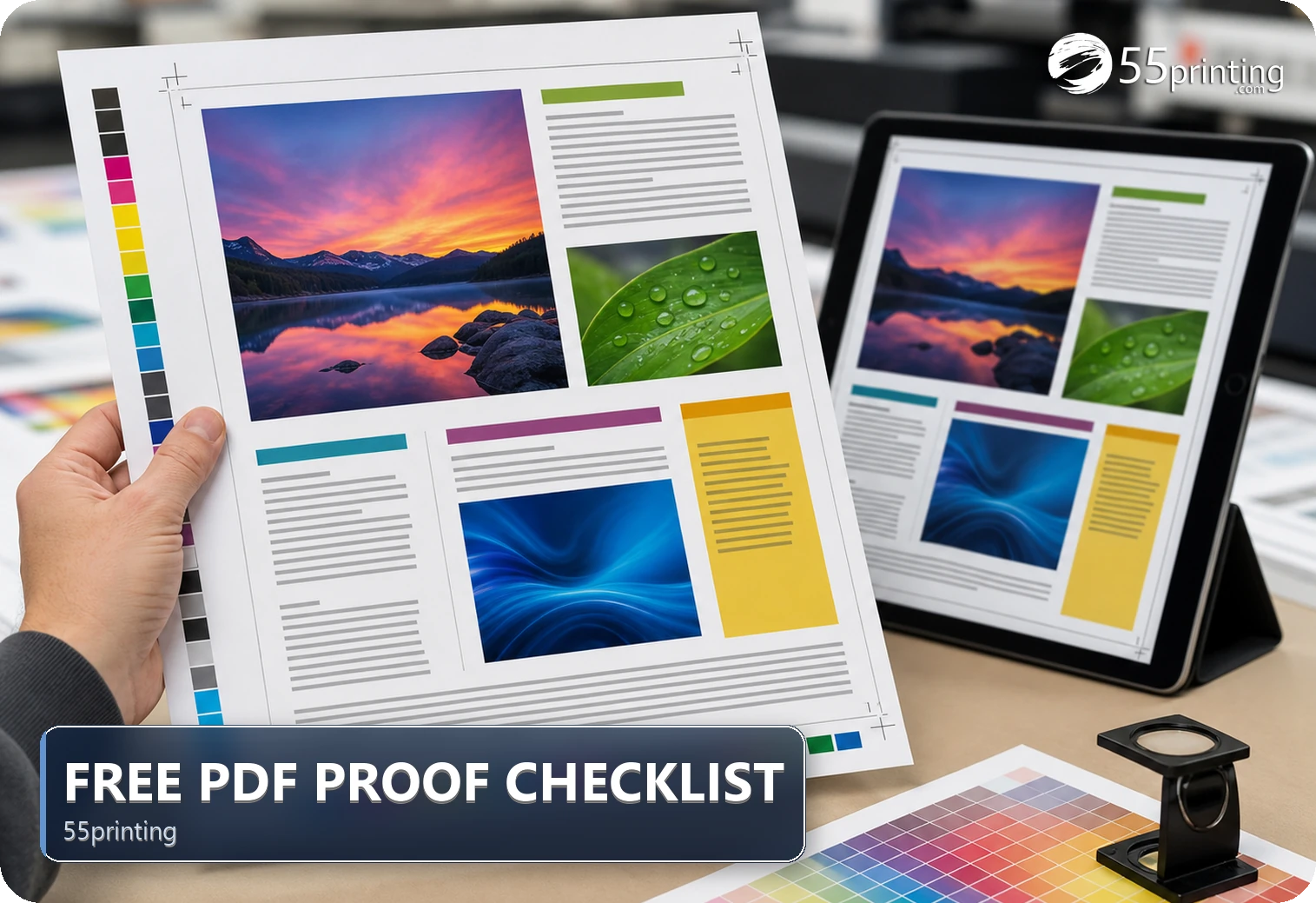
Use the free PDF proof as a final comparison step before approving a print file. Read every word, test URLs and QR destinations, check page order, crop, bleed, safe zone, logos, and small type, then compare the proof with the intended source. A proof can reveal a mismatch, but it cannot decide whether the copy or mark is approved for you.
The 55printing free PDF proof gives you a document view to compare before a production decision. Open the exact proof version, keep the intended source beside it, and review content and geometry separately. A proof is valuable because it can expose a wrong crop or digit, but approval still requires a human decision about the copy, logo, page order, and product.
How should you start a free PDF proof review?
Confirm the product, side or page count, and proof version before reading details. Open the PDF at normal reading size, then use close zoom for small type and fine marks. Keep the source layout, product template, and upload note nearby so a difference can be traced instead of guessed.
Review the proof in a quiet sequence: identity, content, geometry, small details, then final decision. Do not approve while a correction is still being discussed. If the proof is not the expected product or version, stop and identify the correct file before checking individual letters.
- Confirm product, version, and page count.
- Compare the proof with the intended source.
- Use normal view and close zoom.
- Record every change before approval.
Which content checks belong on every proof?
Read all copy rather than scanning only the headline. Check phone numbers, email addresses, URLs, dates, names, item codes, legal lines, and prices character by character. Test each QR code with a phone or known scanner and confirm that the destination is the intended page. Compare logos with the approved source and inspect any changed image.
| Content | Check | Stop when |
|---|---|---|
| Phone or email | Read every character | One digit or symbol differs. |
| URL or QR code | Open or scan the destination | It fails or reaches the wrong page. |
| Logo or mark | Compare shape and proportions | The mark is altered or soft. |
| Small type | Read at finished size | Words are clipped or unclear. |
| Photo or illustration | Compare subject and crop | An important subject is missing. |
How do you check crop, bleed, and safe zone?
Use the product template or stated finished dimensions to check the page canvas. Confirm that backgrounds reach the intended bleed, while text, logos, QR codes, and faces remain inside the safe zone. Inspect trim edges for unexpected white slivers or clipped information. A proof can show the proposed geometry, but the correct product canvas must still be known.
- Confirm page size and orientation.
- Check crop and background coverage.
- Check text and exact marks inside the safe zone.
- Verify front, back, and page order.
- Inspect folds or panels when the product has them.
- Compare the final proof with the source.
Why compare the proof with the source file?
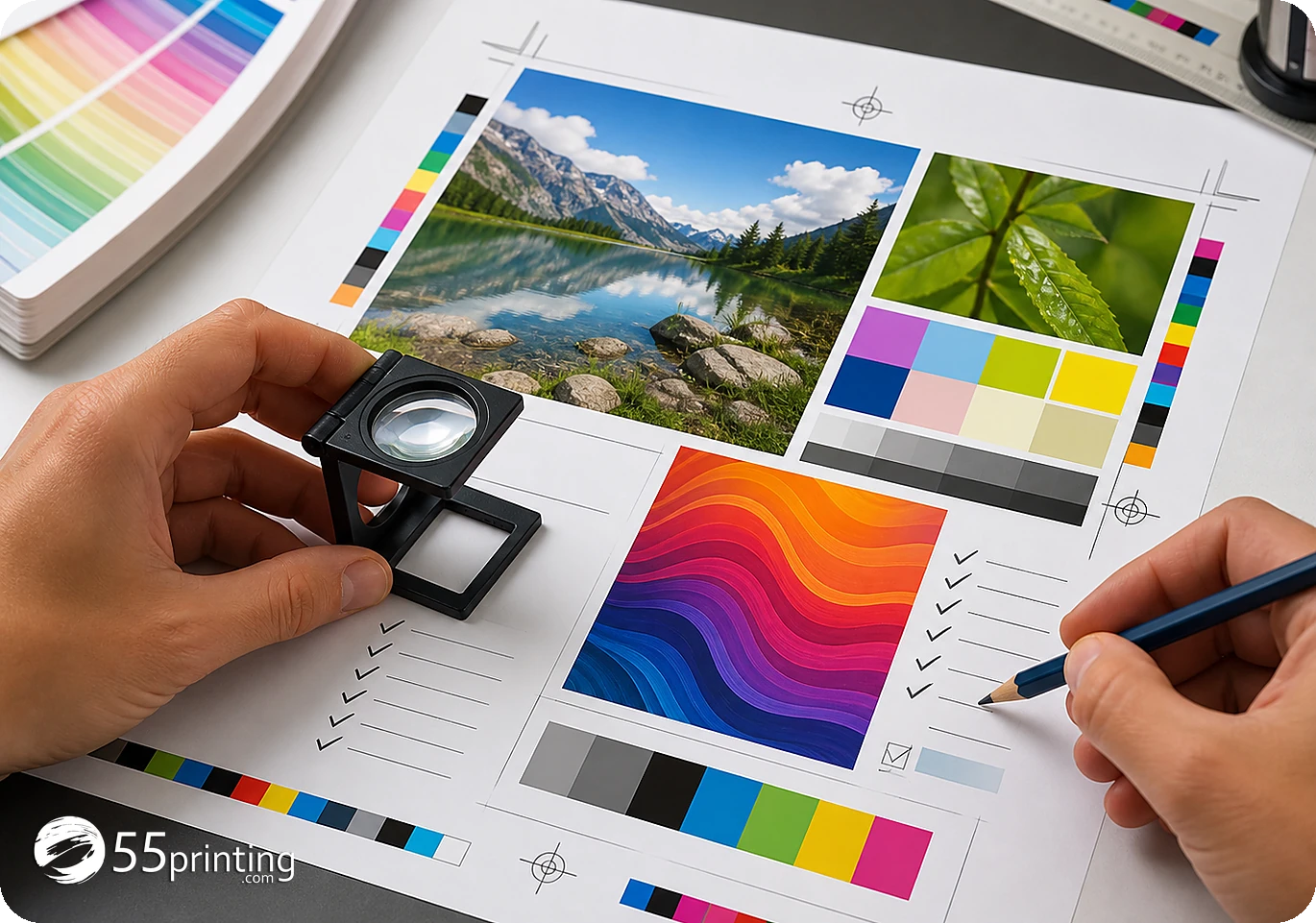
The proof is the proposed production view, while the source explains what you intended. Put them side by side and compare every page, including the area you changed most recently. Check that the proof uses the right version, page order, crop, copy, logos, and image assets. If a correction was requested, make sure the new proof includes it.
Use the matching guideline template when dimensions or safe-zone questions remain. Use the File Uploader when the corrected version is ready for the next handoff. Keep a note of the approved filename so later edits do not silently replace the file you reviewed.
What should you do when the proof is wrong?
Do not approve it. Write a concise correction note with the page, region, current proof version, and intended replacement. After the correction, compare the new proof again from the beginning. A single changed phone number can coexist with an unchanged crop problem, so the corrected proof deserves a complete review.
Which proof situations need extra care?
QR code on a small card
Scan the code from the proof view and inspect the quiet area around it. Confirm the destination and compare the printed-size result instead of trusting a large screen zoom.
Multi-page booklet
Check cover, inside pages, and back cover in order. A page count can be correct while the sequence or one page crop is wrong.
Full-bleed photo flyer
Inspect the crop at each edge, keep faces and important products inside the safe zone, and compare the proof with the intended source photo.
Where does color mode sit on a proof checklist?
The checklist in this article covers content, crop, and the source file. Color mode is missing from a visual pass. Before you approve, open the PDF in Color Profile Check and add one checklist line: CMYK or RGB, and the ICC profile or output intent if the file has one. That is the October 9, 2026 hub scope.
Do not approve the color because the screen looks right, and do not treat RGB as a failed job by default. The tool does not convert the PDF. If the mode surprises you, hold approval and ask the question on the proof you are already reviewing.
Questions customers ask
What should I check in a free PDF proof?
Confirm the product, version, page count, page order, crop, bleed, safe zone, text, phone numbers, URLs, QR destinations, logos, small type, and image subjects. Compare the proof with the intended source in normal view and close zoom. Record any correction before deciding on approval.
Should I test QR codes from the proof?
Yes, scan each QR code with a phone or known scanner and confirm the destination is the intended page. Also inspect its surrounding quiet area and finished-size readability. A code can look visually present while directing to the wrong URL, so visual and destination checks both matter.
How do I check phone numbers and URLs?
Read every digit, letter, punctuation mark, and domain character against the approved source. Open URLs when the workflow allows a safe check and confirm the destination. If a single character differs, record the page and correction rather than approving the proof and relying on a later fix.
Does the proof check bleed and safe zone?
The proof can show the proposed crop and page layout, but you still need the correct product dimensions and template to interpret them. Check background coverage at trim and keep text, logos, faces, and QR codes inside the safe zone before approval.
What if the proof has an error?
Do not approve it. Note the page, region, proof version, and intended replacement, then request or create the corrected version through the current workflow. When the next proof arrives, compare the entire file again because a correction to one detail does not prove that all other pages stayed correct.
Can a proof fix a blurry logo?
No. A proof can reveal that the logo is soft or changed, but it does not recreate the approved source mark. Return to the source or enhancement decision, replace the asset when needed, and request a new proof that can be compared with the correct logo.
How should I review a multi-page proof?
Verify page count and order first, then inspect the cover, each inside page, and the final page. Check crop, text, logos, small type, page-specific images, and any fold or panel treatment. Keep the source page list beside the proof so a swapped page is visible.
When is it safe to approve the proof?
Approve only when the proof is the intended version, the copy and exact marks match the approved source, the product canvas and page order are correct, and crop, bleed, safe zone, small type, URLs, and QR destinations have been checked. Keep the approved filename in your record.
Use the proof as a side-by-side checkpoint for content, geometry, links, marks, and the exact file version.