

LAST UPDATE: 10 / 06 / 2026
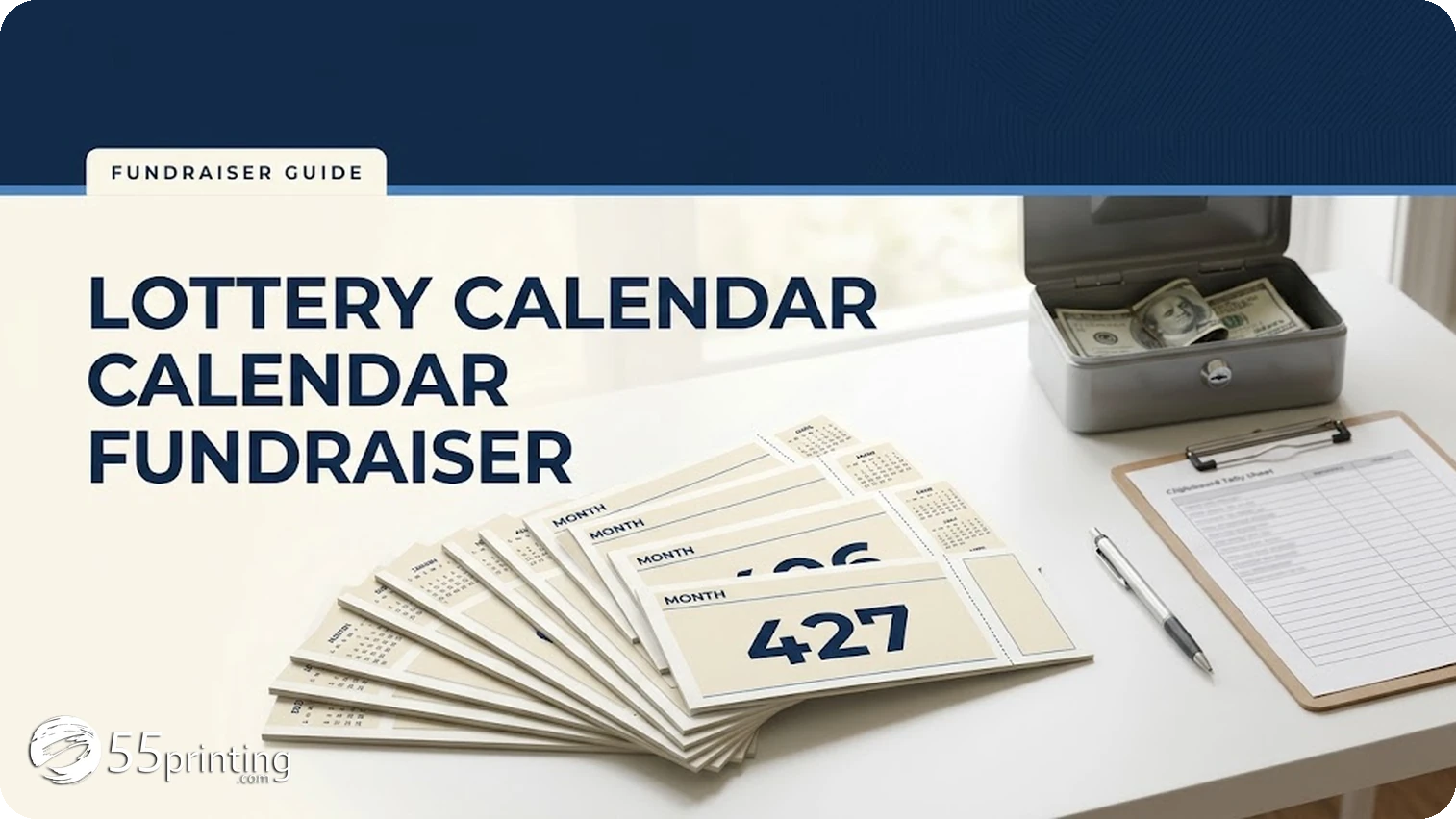
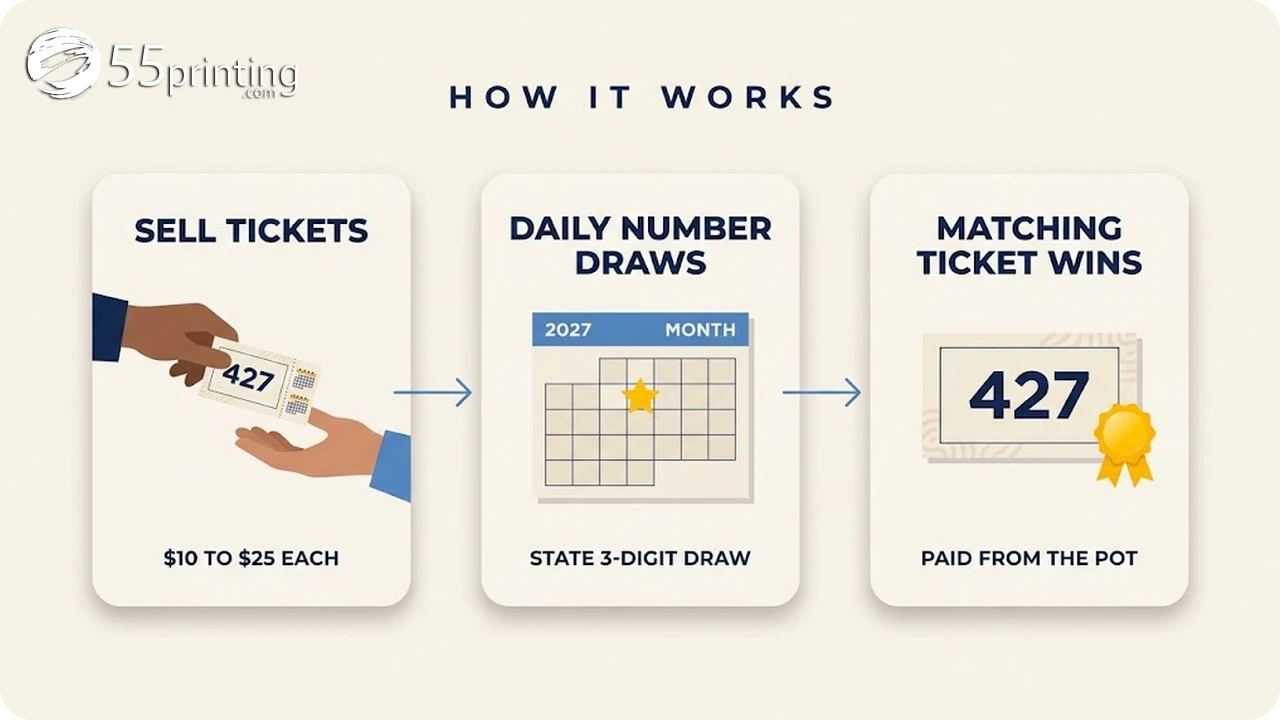
A lottery calendar fundraiser sells numbered tickets, usually $10 to $25 each, and every ticket carries a three-digit number tied to a calendar month. Each day the state's daily three-digit draw decides the winner, and the pot pays that ticket holder. Sell 500 tickets at $20 and the group grosses $10,000 before prizes and print costs.
A booster club needs $9,000 for new uniforms. Instead of selling candles door to door, they print 500 calendar raffle tickets for January 2027, sell each for $20, and every day in January the state’s Pick 3-style evening number pays one ticket holder $25, with a $100 finale on the last day. That is the whole mechanic of a lottery calendar fundraiser, also called a cash calendar or calendar raffle. This page covers how it works, the real math, the honest legality picture, and how to get the tickets printed.
How a lottery calendar fundraiser works
The format is older than the internet and still runs because it is simple. Each printed ticket shows a calendar month and a unique three-digit number, 000 through 999. A buyer pays once, writes their name on the stub, and keeps the calendar half. Every day of the month, the group checks that day’s official state daily three-digit number, the same Pick 3 or Daily Number draw anyone can look up. The ticket whose number matches the drawn number wins that day’s posted prize. No meetings, no redraws, no picking winners by hand: the state runs the draw, and the published result is the audit trail.
Groups usually run it as a single calendar month: January, February, or a season month that fits the group’s calendar. The ticket price sits between $10 and $25, and each day carries a posted prize, typically $25 on weekdays and a bigger number on a holiday or the last day of the month. Because every ticket has a different number, only a fraction of the 1,000 possible numbers are ever sold, which is normal: unsold numbers simply cannot win.
The pot math on a 500-ticket run
The fundraiser works because the prize budget is fixed and known before the first ticket sells. Here is a common January structure: $25 paid daily for 30 days, plus $100 on January 31, which is $850 in total prizes. At 500 tickets sold for $20 each, the pot is $10,000. Subtract $850 in prizes and $75.80 to print the 500 calendar cards and the group keeps roughly $9,075.
| Line | Amount | Notes |
|---|---|---|
| Gross ticket sales | $10,000 | 500 tickets x $20 |
| Daily prizes, 30 days | -$750 | $25 per drawn day |
| Finale prize, January 31 | -$100 | Bigger day keeps sellers talking |
| Printing, 500 calendar cards | -$75.80 | 3.5 x 8.5 card, postcard form |
| Net to the group | about $9,075 | 91 cents per dollar kept |
Two levers move the net: ticket price and sell-through. At $25 per ticket the same run grosses $12,500; at 60% sell-through the same $20 run grosses $6,000 and still clears about $5,075. Set the prize schedule before printing, and write it on the ticket so buyers can see exactly what they are playing for.
Legality, the honest version
A lottery calendar is a raffle, and raffles are regulated. The honest picture: most states allow nonprofits, schools, churches, booster clubs, and fire companies to run small games of chance like this, and some states make it very easy, while others require a license, a fee, or restrict who can sell tickets. Pennsylvania is famous for this format because its small-games-of-chance law explicitly accommodates it, which is why cash calendars are a staple of PA fire-company and club fundraising. Your group’s obligations depend on your state and sometimes your county or municipality.
What we can tell you plainly: we are the printer, not the lawyer. Before you print, have the group’s treasurer check the state small-games-of-chance rules, confirm whether a license is needed, and write the official rules on the ticket itself: prize amounts, draw source, eligibility, and what happens on an unsold number. A clean rules line on the ticket prevents almost every argument this format can produce.
Numbering and printing the tickets
The print spec is the easy part once the mechanic is understood. Most groups use the 3.5 x 8.5 inch calendar card: it prints on the postcard form, 500 cards run $75.80, and the card is the perfect shape for a month grid plus a big three-digit number plus a tear-off stub. Bigger groups who want a full-page calendar with the numbers run the 6 x 9.5 booklet instead, 500 at $699.33 in print, $757.16 packed with Ground shipping.
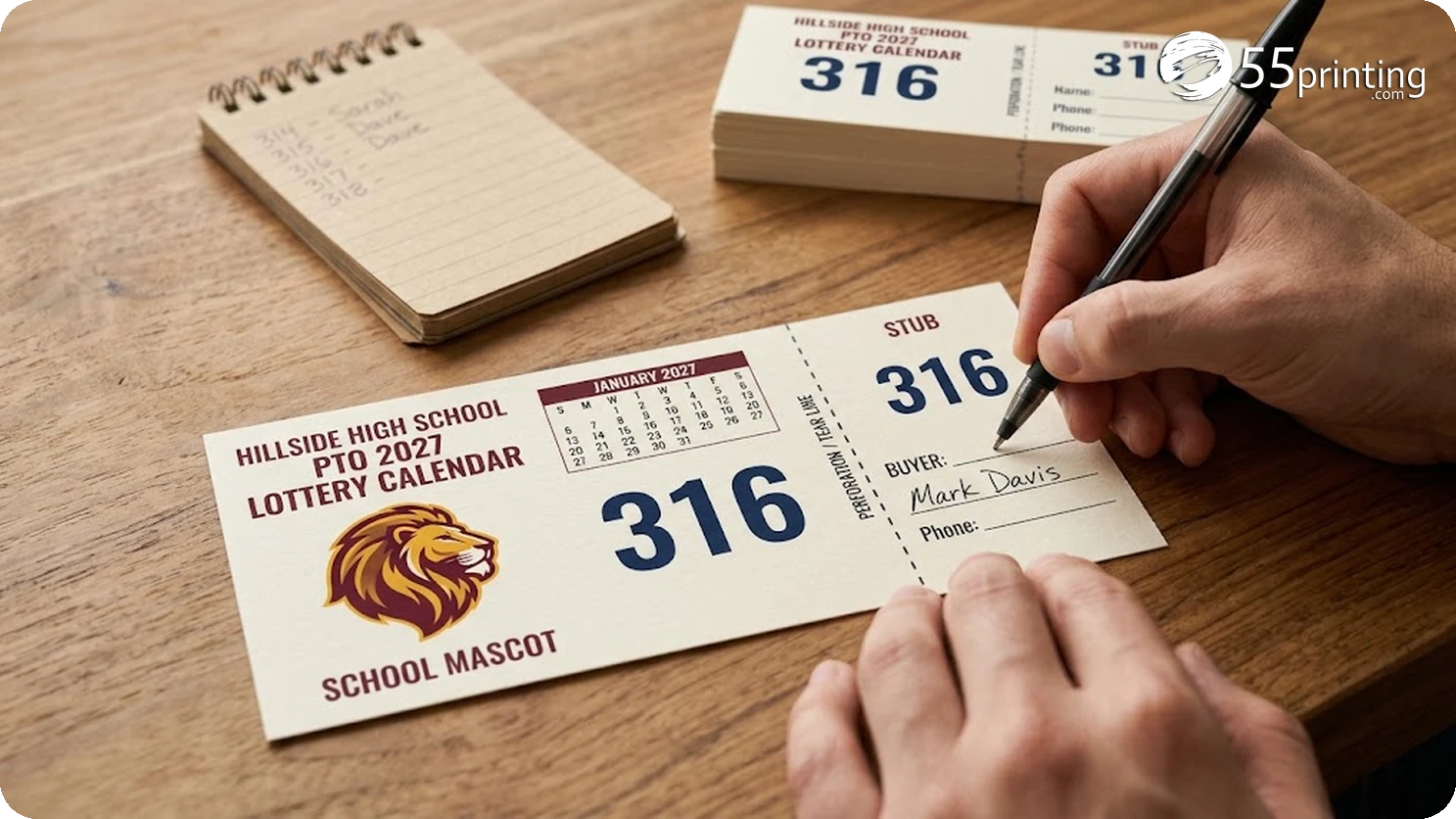
The numbering question everyone asks: our order forms print static art, one design per run, so the ticket design itself does not auto-number. Groups handle numbering two proven ways. Either print the cards with an empty number box and assign numbers at sale time with a stamp or a fine marker, which most small runs do, or typeset the numbers into the art before printing, which the template sheet below makes easy: it is an 8-up letter sheet of ticket frames with the January 2027 grid and a numbered field in each. Fill in your numbers, print, cut, sell.
Design tips that sell more tickets
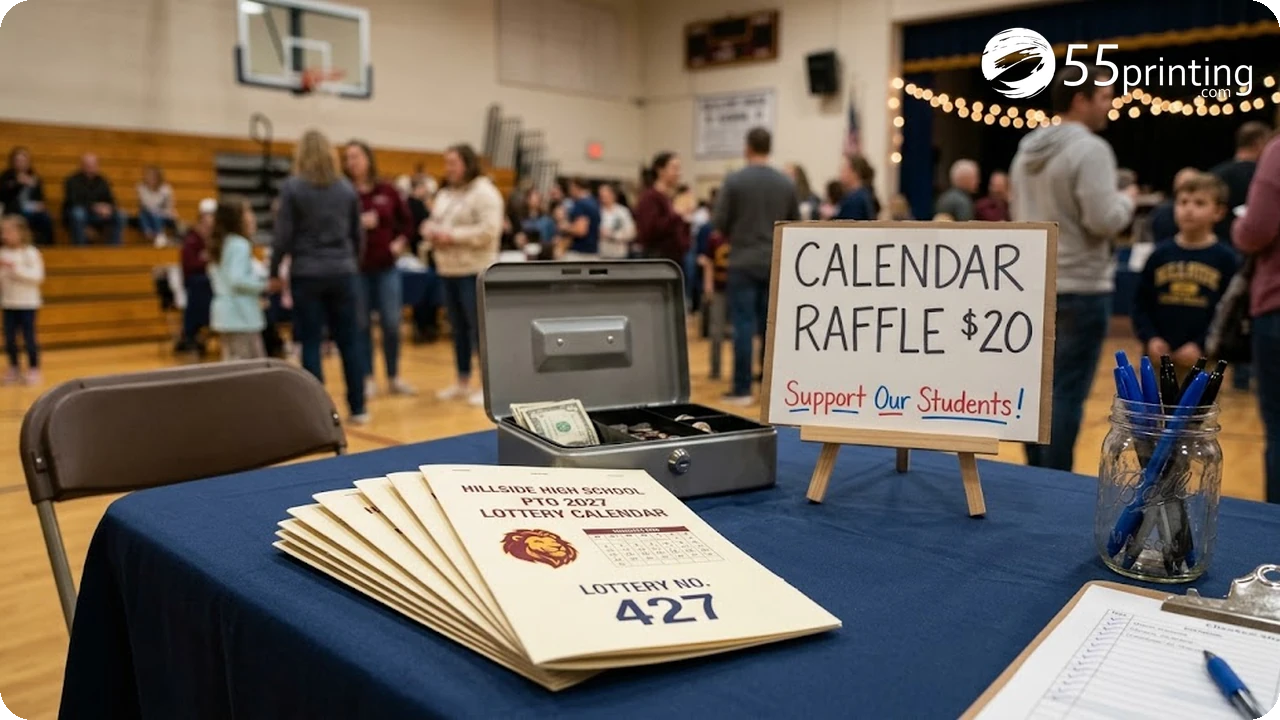
The tickets that move fastest put three things in the first two inches: the group’s name, the month being played, and the prize schedule. Buyers want to see what they can win without asking. Keep the three-digit number huge; it is the piece of the ticket people check every day, and a big number reads at arm’s length on a fridge. Put the draw source in small print, “winners follow the state daily three-digit evening number,” and put the rules line along the stub.
Two design mistakes to skip. Do not squeeze the month grid so small it becomes decorative; the calendar is the reason the ticket earns a month on the wall instead of a day in a pocket. And do not forget the stub workflow: the stub collects the buyer’s name, phone, and assigned number, and it is what your treasurer reconciles against the cash box.
When to print for a January or February run
Calendar printing takes 4 to 9 business days from proof approval and payment to your door. For a January 2027 calendar month, the classic cash-calendar timing is tickets in sellers’ hands by early December, because holiday gatherings and December events are where most of the selling happens. To hold December 4 in hand, approve and pay by Friday, November 20 on default papers. For a February run, approve by early January. The full order-by table lives in when to order 2027 calendars.
October is when most groups lock their prize schedule and design. A group that wants a January month and December selling has maybe a week of slack left before the timeline gets tight, so this is the moment to settle the prize list and get the file to proof.
Download the lottery calendar ticket sheet

Lottery calendar fundraiser: common questions
How do cash calendar fundraisers work?
Each printed ticket shows a calendar month and a unique three-digit number. Buyers pay once, usually $10 to $25, and every day of the month the state’s daily three-digit draw decides the winning ticket. Matching ticket number wins that day’s posted prize. The draw is public and automatic, so nobody has to pick winners.
Is a lottery calendar fundraiser legal?
For nonprofits, schools, churches, booster clubs, and fire companies, usually yes, but raffle rules are set by state and sometimes county law, and some states require a small-games-of-chance license or restrict who may sell. Pennsylvania’s law is famously friendly to this format. Check your state rules and put your official rules on the ticket.
How much can a lottery calendar fundraiser make?
Scale it by tickets and price. 500 tickets at $20 grosses $10,000; after $850 in typical prizes and $75.80 in printing, the group keeps about $9,075. At $25 per ticket the same run grosses $12,500. The prize budget is fixed up front, so every extra ticket sold drops straight to the bottom line.
Where do the winning numbers come from?
From the state’s published daily three-digit lottery draw, the Pick 3 or Daily Number style game in your state. Each ticket’s printed three-digit number is compared to that day’s official draw, and the matching ticket wins the posted prize. Using the public draw keeps the game honest and self-auditing.
What do I print for a lottery calendar fundraiser?
The standard piece is the 3.5 x 8.5 inch calendar card printed on the postcard form: 500 cards cost $75.80 and each card carries the month grid, a big three-digit number, the prize schedule, the rules line, and a tear stub. Groups wanting a full-page version use the 12-page 6 x 9.5 booklet at $699.33 for 500 in print.
How do we put a different number on every ticket?
Two ways. The common way: print cards with a blank number box and assign numbers at sale time with a stamp or marker. The tidy way: typeset numbers into the art before printing, which the downloadable 8-up ticket sheet on this page is laid out for. Fill in your numbers, print, and cut.
Which month should we run the calendar on?
January and February are the classic months because the game follows the calendar days of the month you print. Groups selling through December holidays run January. Sports and school groups often pick a month inside their season. Any month works; the ticket just needs to name the month the draws apply to.
When should we order the printing?
Count back 4 to 9 business days from when sellers need tickets, plus design time. For a January run with December selling, approve and pay by November 20 to hold a December 4 in-hand date. The deadline table in when to order 2027 calendars covers every target date.
500 calendar cards run $75.80 on the postcard form, and the 12-page booklet runs $699.33 for 500 in print, $757.16 packed with Ground shipping shown before checkout.