

LAST UPDATE: 10 / 06 / 2026
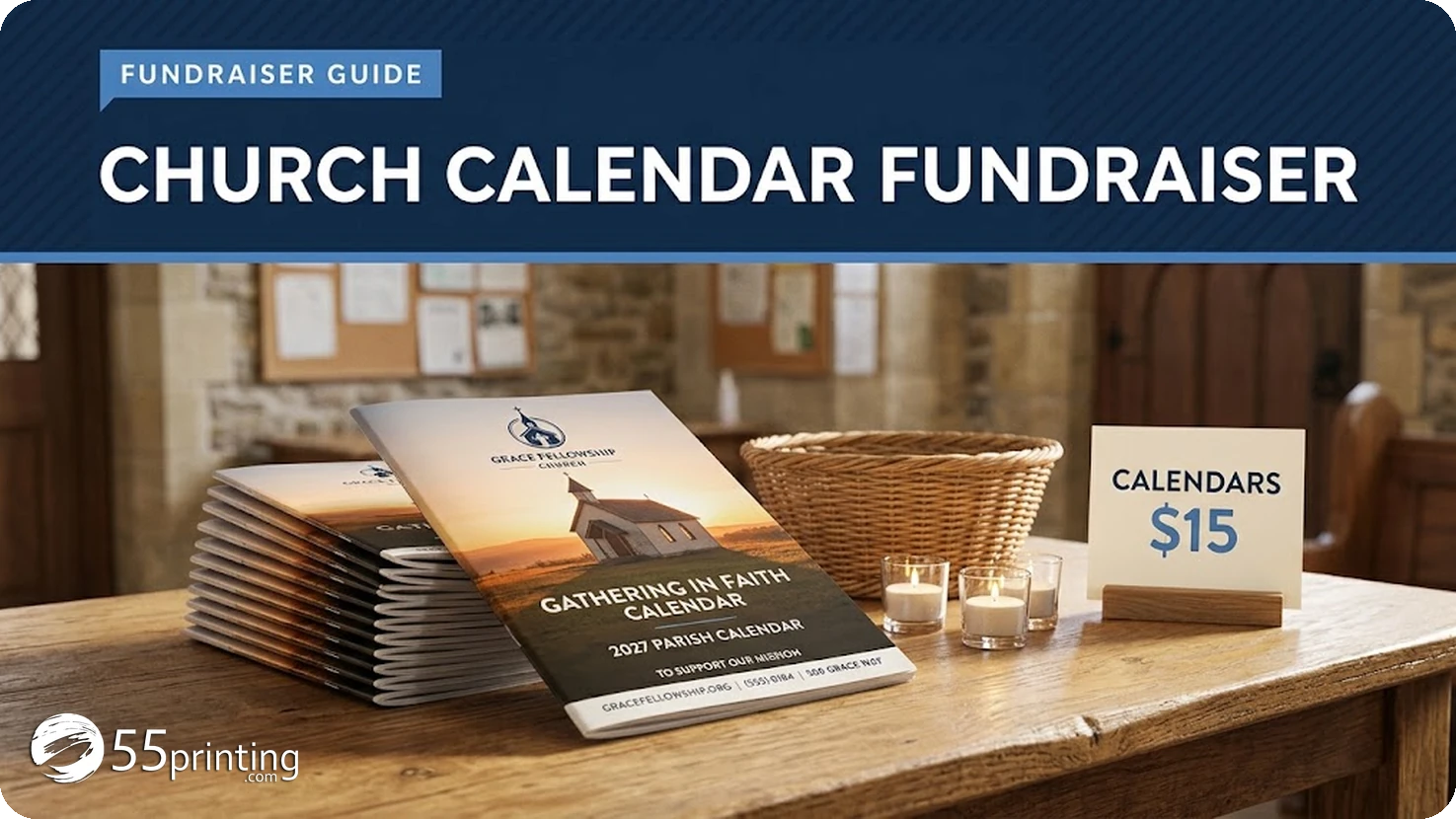
A church calendar fundraiser sells printed calendars carrying scripture verses, ministry event dates, and the congregation's own photos, usually for $10 to $20 after Sunday service. A church ordering 500 16-page booklets at $841.94 and selling at $15 grosses $7,500 and keeps about $6,658 for the mission, building fund, or youth group it supports.
Churches have an advantage almost no other fundraiser gets: a built-in audience that shows up every week, trusts the institution, and already wants the thing being sold. A calendar that carries a verse per month, marks the congregation’s real dates, and supports a named cause, a mission trip, the building fund, the youth retreat, is bought as a small act of support, not a purchase. This page covers how to structure the calendar, the math at church scale, and how to run the sale without turning the welcome table into a checkout line.
Why the church version sells differently
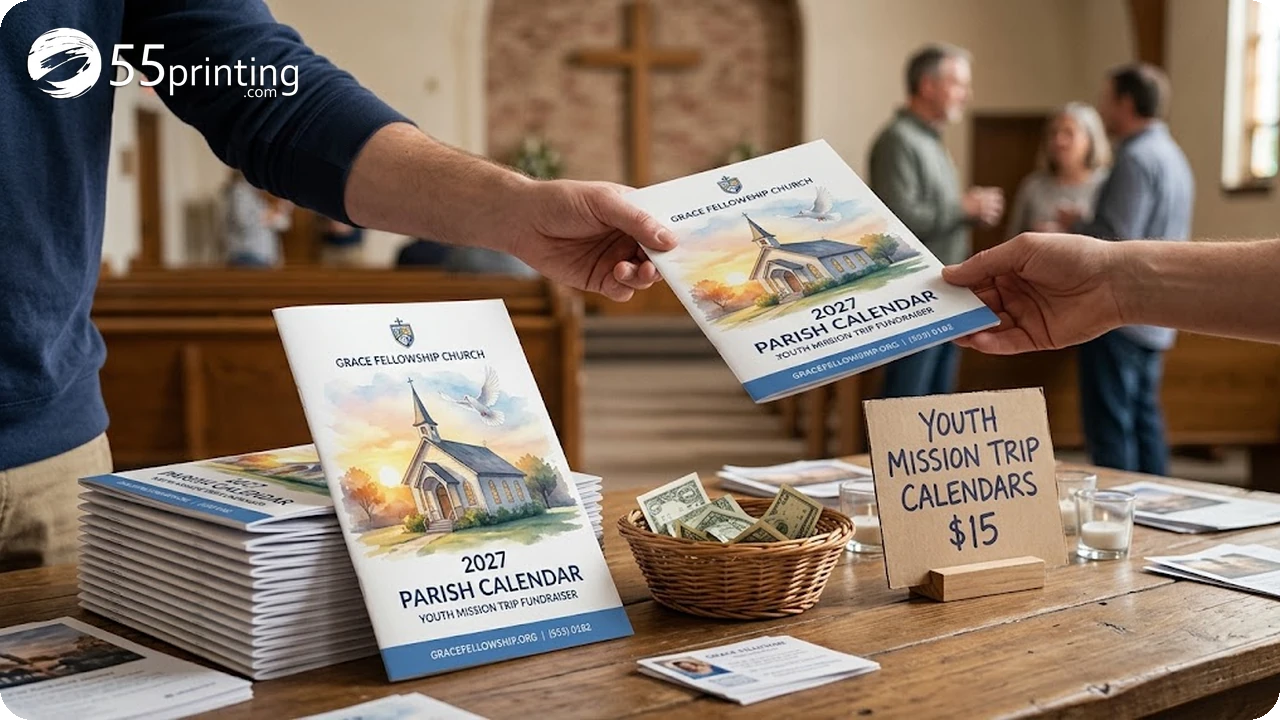
Three things separate a church calendar from every other fundraiser calendar. First, content: the buyer is buying the church year itself. Mark the real dates, Easter services, VBS week, the fall festival, the Christmas Eve candlelight service, and the calendar becomes the congregation’s planning tool, not a decoration. Second, placement: the sale happens in the lobby after service where the whole congregation already is, not door to door. Third, motive: buyers see the price as a donation they get a calendar for, so $15 lands easier than the same $15 in a store.
That combination means a church can pre-sell hard. Announce from the pulpit or in the bulletin, take pre-orders for two Sundays, then order to the count. A congregation of 200 families that converts a third of them is a 500-copy run already, and the second announcement Sunday, “last Sunday to order,” reliably doubles the take.
The math at congregation scale
Calendar printing is priced so the per-unit cost falls fast at church-sized quantities. The standard piece is the 16-page 6 x 9.5 saddle-stitched booklet: cover, twelve month pages with the calendar’s art and verse, and a back page for the church name, service times, and contact line. Sold at $15, here is what the run returns at each quantity.
| Quantity | Print cost | Gross at $15 | Net to the ministry |
|---|---|---|---|
| 500 calendars | $841.94 | $7,500 | about $6,658 |
| 1,000 calendars | $998.67 | $15,000 | about $14,001 |
| 2,500 calendars | $1,675.49 | $37,500 | about $35,825 |
Most churches size the run to the congregation, not the math table: families plus grandparents plus the homebound list. The smart order is pre-order count plus 15 percent for post-service impulse sales and the Christmas visitors who appear in December. If the mission fund needs a specific number, divide it by roughly $13 a calendar and that is the sell target to put in the bulletin.
Scripture, event dates, and the cover
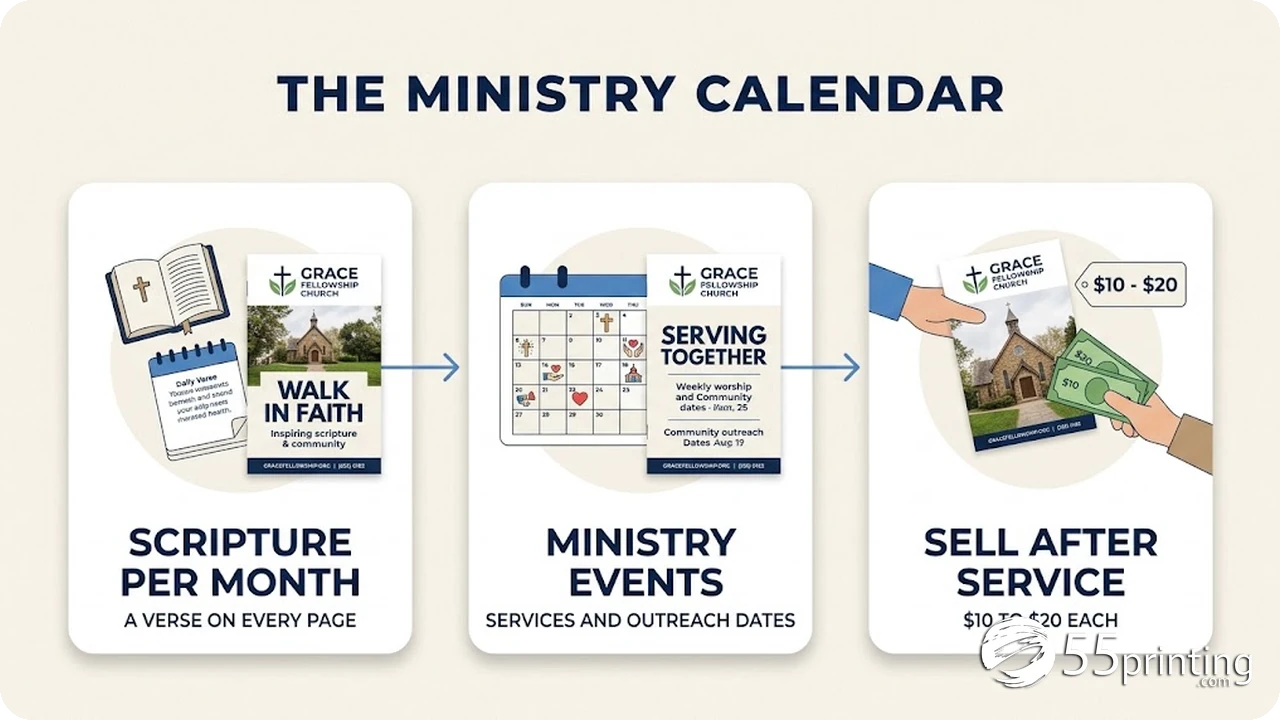
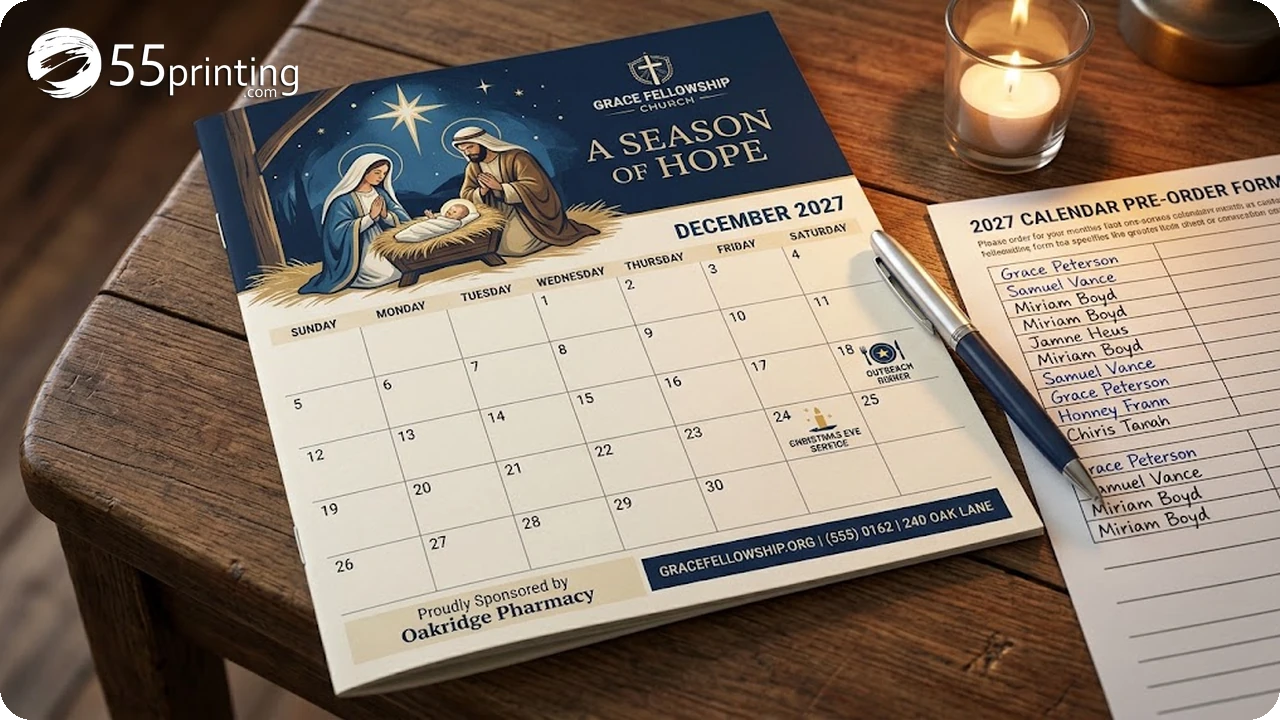
The content recipe that works: one verse per month chosen to fit the season, resurrection themes in spring, gratitude in November, nativity in December; ministry dates printed directly in the grid so the calendar is the church calendar; and the congregation’s own photos or themed art on the page tops. Our free church-themed 2027 template below already carries correct dates and federal holidays, so the design work is mostly dropping in your verses and events.
Three details make it feel professional instead of homemade. Put the church name and year on the cover spine area, not only the front. Credit the photographer or artist on the page, members love seeing their own names in print. And keep the back page useful: service times, office phone, social handles, and a short line naming what the fundraiser supports, because that is the line that turns a fridge calendar into next year’s donor list.
Collecting orders without a checkout line
Post-service selling works when the process is thirty seconds: a volunteer at the welcome table, the sample calendar open to December, a price sign, and the pre-order sheet. Cash and checks land on the spot; for the congregation that carries neither, a QR code to the church’s giving app or a pay-later list both work. The pre-order form download below is built for exactly this: name, quantity, paid, picked up.
Two channels widen the take without extra Sundays. The bulletin insert card lets people take the order home and return it with next week’s offering. And a photo of the calendar cover in the church newsletter or social page captures the members who only attend monthly. Both end with the same instruction: return the form or pay at the table by the deadline Sunday.
Sponsor angels cover the print bill
Churches sit inside a community of member-owned businesses, and the calendar gives them a natural way to support the ministry. Offer a sponsor strip on a month page or the back cover: the business name, a line like “sponsored by the Miller family in memory of their parents,” or a local firm’s logo. Twelve sponsors at $125 covers $1,500, the whole 500-copy print run and then some.
The approach that works is personal, not a rate card: the pastor or fundraising chair mentions it to the congregation’s known business owners directly. The sponsor sign-up worksheet tracks who claimed which month and whether the art or logo has arrived.
Printing the calendars
The standard church piece is the 16-page 6 x 9.5 saddle-stitched booklet with a hanging hole. Interior grid pages should be a paper that takes pen, because congregation calendars get written on; save the gloss for the cover and photo pages. Photos and art need 300 DPI at final size, and every photo of a member, especially children, needs a signed release. The photo release form covers that, and the print-ready checklist in the money page downloads covers bleed and safe zone.
If nobody volunteers to do the layout, the free calendar design request builds the file from your verses, dates, and photos at no charge, and the file-uploader path gives you a free proof before a single copy prints.
When to order for a December launch
Calendars print in 4 to 9 business days from proof approval and payment to your door. Churches selling a 2027 calendar want boxes in the lobby by the first Sunday of December, when attendance swells for Advent. Working back: approve and pay by Friday, November 20 on default papers, which means the two pre-order Sundays are mid-November and the design wraps by early November. The full order-by table lives in when to order 2027 calendars.
Downloads for the church fundraiser
 PDF, 16 pagesChurch Calendar Template 2027Complete 6 x 9.5 booklet: cover, 12 month grids with faith-themed art, holidays marked. Print-ready layout to copy.Download PDF
 PDF, 1 pageCalendar Pre-Order FormHeader fields plus 16 buyer rows with paid and picked-up checkboxes. The welcome-table record.Download PDF
Church calendar fundraiser: common questions
How does a church calendar fundraiser work?
The church prints a calendar carrying scripture verses, ministry event dates, and the congregation’s photos, then sells it after service for $10 to $20 toward a named cause. Most churches run two pre-order Sundays, print to the count plus a buffer, and hand out calendars in the lobby in December.
How much can a church raise selling calendars?
At 500 calendars sold for $15 the church grosses $7,500 and nets about $6,658 after the $841.94 print run for the 16-page booklet. At 1,000 sold, the net reaches about $14,001. Sponsor spots on month pages can cover the entire print cost before the first calendar sells.
What should go on a church fundraiser calendar?
A verse per month matched to the season, the congregation’s real ministry dates printed in the grid, and member photos or themed art on the page tops. The back page carries service times and the fundraiser’s named cause. Our free church 2027 template below is a print-ready example.
When should we sell the calendars?
Announce in mid-November, take pre-orders for two Sundays, and deliver the first two Sundays of December when Advent attendance peaks. To hold an early-December delivery, approve and pay by November 20 on standard production, which the order-by table maps out.
Do we need releases for member photos?
Yes. Every recognizable person in a printed calendar photo needs a signed release, and children need a parent or guardian’s signature. The free photo release form linked in the article covers it. Skipping releases is the one step that can genuinely hurt a church fundraiser.
What size and binding works for a church calendar?
The 6 x 9.5 saddle-stitched booklet with a hanging hole is the standard: 16 pages covers the cover, twelve months, and back, and 500 copies print at $841.94. Keep the grid paper pen-friendly because congregation calendars get written on, and use gloss only where the art lives.
Can a small congregation still do this?
Yes, but size the run honestly. Fifty families will not sell 500 calendars, so a small church either sells pick-a-date style or partners the calendar with a sister ministry to share the run. The pick-a-date format at pick-a-date fundraiser needs no large print quantity at all.
How do we collect payment after service?
Keep it thirty seconds: a volunteer, a sample, a price sign, and the pre-order sheet. Cash and check on the spot, a QR code to the church giving app for the card-only crowd, and a pay-later list for anyone who wants to return with payment. The download below is the tracking form.
The 16-page booklet runs $841.94 for 500, about $1.68 each, with Ground shipping shown before checkout.