

Production Time vs Shipping Transit: Keep the Stages Separate

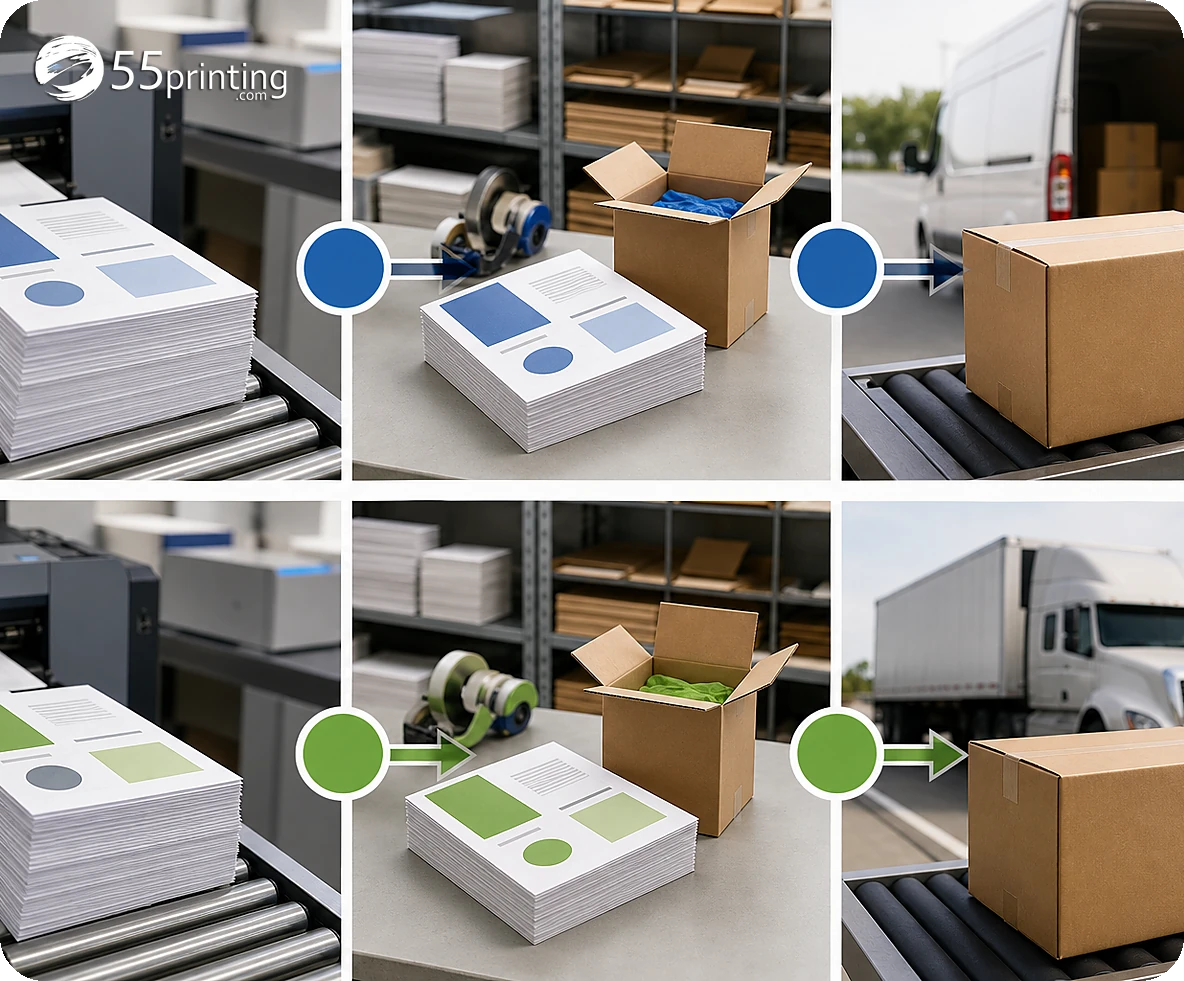
Production time covers the work needed to prepare and make the approved print file or product. Shipping transit begins after handoff and concerns movement toward the destination. State the needed arrival context, confirm source, proof, production, handoff, and transit stages separately, and avoid combining an unconfirmed production estimate with shipping as one delivery promise.
The 55printing File Uploader and proof path support source and review questions; they do not turn transit into production. The free print preflight checks dimensions, bleed planning, and effective PPI before a file is ready to review. That is a production-readiness check, not a shipping estimate. After a job has shipped, My Account is the account route for the order record. It does not invent a carrier arrival date. Start with the product and current template, identify what must be approved, and ask for current stage information when planning a date.
What is the difference between production and transit?
Production covers the work before a finished print item is handed off: source review, product selection, file preparation, proof, approval, and manufacturing steps appropriate to the active workflow. Transit starts after handoff and depends on destination, route, carrier, and current tracking information. The stages should be described and confirmed separately.
| Stage | Question answered | Evidence | Do not combine with |
|---|---|---|---|
| Source readiness | Is the correct file available? | Named source, copy, and assets | Transit estimate |
| Proof and approval | Is the prepared file accepted? | Current proof and response | Production completion |
| Production | Has the approved product been made? | Current workflow status | Carrier movement |
| Transit | Where is the handed-off shipment? | Current route or tracking information | File preparation time |
How should a date-sensitive request be prepared?
State the destination context, needed arrival date, product, source version, proof questions, and open risks. Identify whether the file is ready for review or still needs copy, asset, geometry, or approval decisions. Ask the active workflow to confirm the current stage and separate any production question from transit information.
- State the destination and needed date.
- Name the product and source.
- List proof and approval questions.
- Identify production dependencies.
- Ask for current handoff status.
- Check transit information separately.

What should remain visible in the handoff?
Keep the source version, product, approved copy, current template, proof response, handoff status, destination context, and open risk visible. A file can be production-ready while transit remains unknown, or transit can be available while the file is still awaiting approval. Use precise stage language in the note.
How does proof relate to production time?
Use the proof path to review exact content, crop, product size, bleed, safe zone, page order, and image detail before approval. A proof response can be a production dependency, but it is not a transit update. Record the approval state and then ask the current workflow what production and handoff information is available.
Which timing questions need extra care?
Event date is fixed
State the date and destination, then separate source readiness, proof, production, handoff, and transit questions. Do not turn a target date into a promise before each stage is confirmed.
Proof is still open
Resolve exact copy, product, asset, and geometry questions first. Production planning that ignores approval can create a false sense of progress.
Shipment has been handed off
Ask about current transit and destination status separately from the earlier production work. A handoff changes the question from file readiness to movement. Print preflight no longer answers that question. Use My Account for the order record, and keep any carrier update separate from the production clock.
Questions customers ask
What is production time?
Production time describes work needed after a file and product are ready for the active workflow, including preparation, approval dependencies, and making the approved item. It does not describe carrier movement. Confirm current production status through the workflow instead of applying a generic number. Record the stage, source version, and current question so the next update answers the right timing issue.
What is shipping transit time?
Transit is the movement stage after a shipment is handed off toward its destination. It is separate from file preparation and production. Check current route or tracking information for the shipment rather than combining transit with an unconfirmed production estimate. Record the stage, source version, and current question so the next update answers the right timing issue.
Does proof approval start shipping?
Proof approval is a file and content checkpoint. It may allow later production steps, but it is not the same as production completion or shipment handoff. Record the approval state, then confirm current production and transit stages separately. Record the stage, source version, and current question so the next update answers the right timing issue.
How should I ask about a fixed date?
State destination context, needed arrival date, product, source version, proof questions, and open risks. Ask which stage is current and what can be confirmed. Separate file readiness, proof, production, handoff, and transit instead of asking for one unsupported arrival promise. Record the stage, source version, and current question so the next update answers the right timing issue.
Can a rush request combine the stages?
No. A rush request may ask about priority, but source readiness, proof, production, handoff, and transit remain separate questions. Give the active workflow complete evidence and ask for current confirmation at each relevant stage without treating priority as a guarantee. Record the stage, source version, and current question so the next update answers the right timing issue.
What if the source is not approved?
Record the missing copy, asset, product, geometry, or proof response before discussing a final date. Production planning that ignores an open approval can misstate readiness. Use the current template and proof path to close source questions first. Record the stage, source version, and current question so the next update answers the right timing issue.
What should the timing note include?
Name destination, needed date, product, source version, approval state, proof questions, current workflow stage, and open risk. State whether the question concerns production, handoff, or transit. Precise stage language prevents a status update from being read as a delivery promise. Record the stage, source version, and current question so the next update answers the right timing issue.
Does a shipment status prove production time?
A shipment status can show information after handoff, but it does not reconstruct how long source review, proof, approval, or production took. Keep those records separate. Use current status for the current stage and avoid back-calculating a universal production duration. Record the stage, source version, and current question so the next update answers the right timing issue.
Name the source, product, proof state, production question, handoff, destination, and transit question separately.