

Search engine and AI referrals are useful discovery signals, not proof that one source caused an order. Registration adds the customer's own answer plus first-touch browser context, so a trustworthy report keeps estimated registration referrals, observed visits, declared sources, and completed orders as related but separate layers.
A print buyer can discover a product in a search result, ask an AI assistant for a recommendation, return later by typing the address, and create an account only after deciding that the shop feels useful. If a report counts only the final order, that journey looks simple. The first-party evidence behind 55printing is more interesting: search engine and AI referrals show visible discovery paths, while registration feedback adds a customer voice that browser logs cannot provide by themselves.
What do search engine and AI referrals show about discovery?
The conversion tracker records source context around an order: the referrer, the landing page, first-touch information, UTM hints, and the label assigned to the visit. That makes it possible to separate an external discovery signal from an internal page transition. A click from Google is different from a customer moving from a 55printing product page to the cart, even though both events may appear in a simple referrer report.
Across the reviewed data, search engines supplied the clearest external discovery pattern. AI referrals also appeared as a distinct path rather than disappearing into a general “direct” bucket. Other referral hosts were present but more scattered. The lesson is not that one source will always win. The useful lesson is that the sources can be named, compared, and improved separately.
| Group | Interpretation |
|---|---|
| Search engines | Largest observed external discovery group in the reviewed conversion snapshot. |
| AI recommendations | Visible and measurable, with enough signal to deserve its own report. |
| Other referrals | Smaller and more varied hosts that should not be forced into search or AI categories. |
This is a success story because the site can see more than a last-click label. It can study the path that brought a person to the shop and then compare that context with what the customer did next. It also creates a responsible reason to improve content: a useful answer can help a buyer before the buyer is ready to open a calculator or place an order.
Why should AI recommendations be tracked separately from search?
Search and AI both help people discover businesses, but they do not always expose the same evidence. A search engine may send a browser referrer from a search domain. An AI assistant may send a UTM source, a product link, or no conventional referrer at all. If both are grouped under “search,” the business loses the ability to learn which questions are being answered by an assistant and which pages are being selected as recommendations.
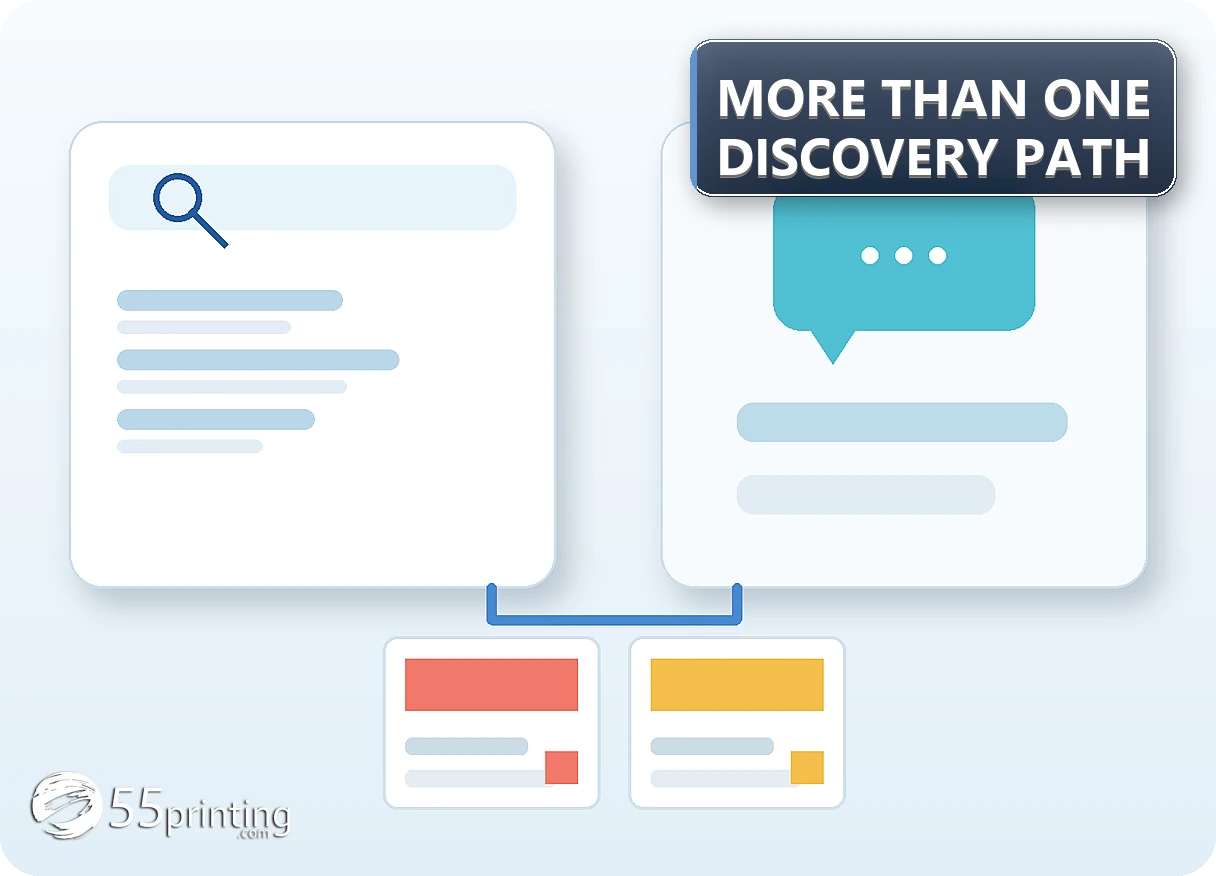
The reviewed data gives 55printing a practical starting point. ChatGPT produced the clearest AI signal in the snapshot, while other named AI systems were sparse or absent in that period. That does not make the result a permanent ranking of AI platforms. It tells us to keep the categories separate, keep the evidence dated, and continue publishing pages that answer real print-buying questions in plain language.
Search referral
- Often carries a recognizable search host.
- May reveal the landing page but not the query that was typed.
- Benefits from clear titles, useful headings, and strong page answers.
AI recommendation
- May arrive with a distinct source, UTM hint, or limited referrer.
- Reflects a page selected for a question or recommendation.
- Benefits from accurate facts, extractable answers, and clean internal links.
The recommendation is simple: report AI as its own channel, but do not write as if an AI click proves why a customer purchased. Attribution is a lens on discovery. It is not a controlled experiment.
What does customer registration add to referral research?
Registration adds a different kind of evidence. When a visitor creates a 55printing account, the form can ask how the customer heard about the shop. The customer may choose Google, ChatGPT, Yahoo, Bing, a friend or family member, social media, direct, referral, or another source. If the customer selects Other, a short explanation can be saved. This is declared attribution: what the person remembers and chooses to tell us.
The browser also sends first-touch context when it is available. The account system can preserve the first referrer, UTM source, and landing URL, then normalize recognizable sources into a traffic label. Those observed fields are useful, but they are not the same as the customer’s answer. A person may remember Google even when the browser does not send a referrer. Someone arriving from an AI app may select Other. Both statements can be honest.
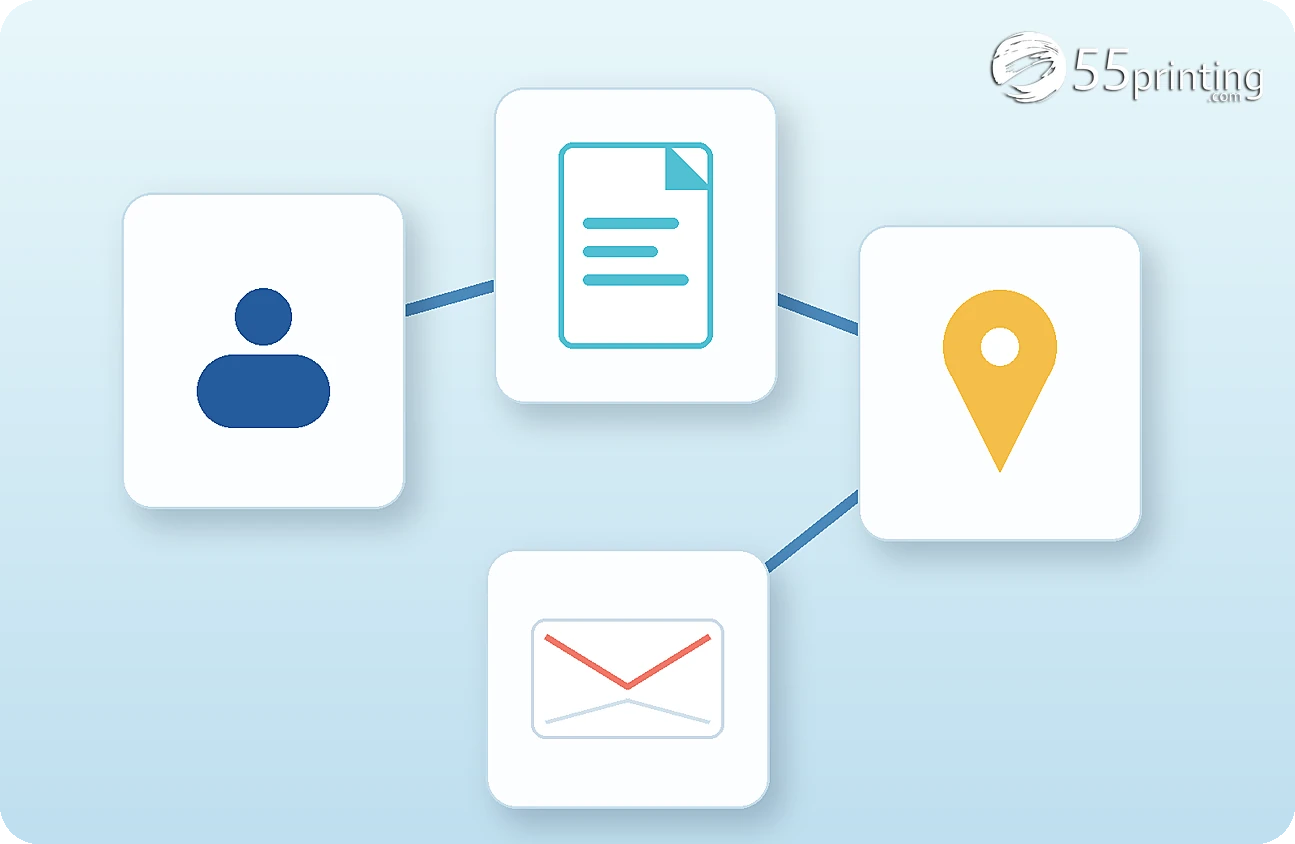
The most useful report keeps these layers visible:
- Observed source: what the browser and tracker can see about the arrival.
- Declared source: what the customer says when creating an account.
- Relationship milestone: registration, saved address, design activity, or another account action.
- Commercial outcome: a later order, reported separately and joined only in an aggregate, privacy-safe analysis.
This matters because registration is valuable even when it does not lead to an immediate order. An account can make order tracking, saved addresses, and the free Design Studio easier to use. It also gives the business a respectful way to learn whether the content and product experience are reaching people through the channels they recognize.
What can a registration estimate tell us?
A registration estimate adds a second success signal to the story. The conversion report asks which sources appear in order journeys. The registration report asks which sources are helping people create an account, even when they are still researching or never place an order. That distinction matters for a print shop because account creation can be an early relationship milestone rather than a failed sale.
The working estimate should keep three buckets visible: source-aligned registrations where the customer’s answer and browser context point in the same direction, registrations with only one usable source signal, and registrations with missing or blank source fields. In the available local snapshot, Google is the clearest aligned registration signal, while many records do not contain enough referral fields to identify a source. The responsible conclusion is that registration referrals are measurable and useful, but the incomplete records must remain unknown rather than being labeled direct.
| Estimate layer | What it helps answer | Safe interpretation |
|---|---|---|
| Customer-declared source | What the person remembers or chooses to report | First-party customer voice, not proof of causation |
| Observed first-touch source | What the browser and signup payload preserve | Technical corroboration, sometimes incomplete |
| Registration without an order | Whether discovery created an account relationship | Early interest or utility, not a revenue result |
| Blank or missing source | How much attribution coverage is still unavailable | Unknown, not automatically direct traffic |
That makes registration estimation worth publishing as a directional companion to order attribution. It can guide better signup questions, clearer content, and stronger account benefits without pretending that every registration has the same commercial value.
How do search, AI, registration, and orders fit one customer path?
A customer journey is rarely a straight line from one referrer to one purchase. A more honest model is a sequence of decisions. The visitor discovers a useful answer, evaluates the product and the trust signals, chooses whether an account helps, and then returns to finish the job. Each system records a different part of that sequence.
- DiscoverSearch result, AI recommendation, social link, referral, or direct visit
- EvaluateUseful guide, product page, proof explanation, file help, or pricing path
- ConnectOptional registration, saved address, design activity, or guest continuation
- OrderTracked conversion with source context retained for aggregate analysis
For a print shop, this model changes what “marketing” means. The goal is not to force every visitor into an account or to claim a channel caused a result. The goal is to make each decision easier: answer the question, show the relevant product, explain what happens next, preserve a usable account path, and keep the reporting honest.
What should 55printing do next?
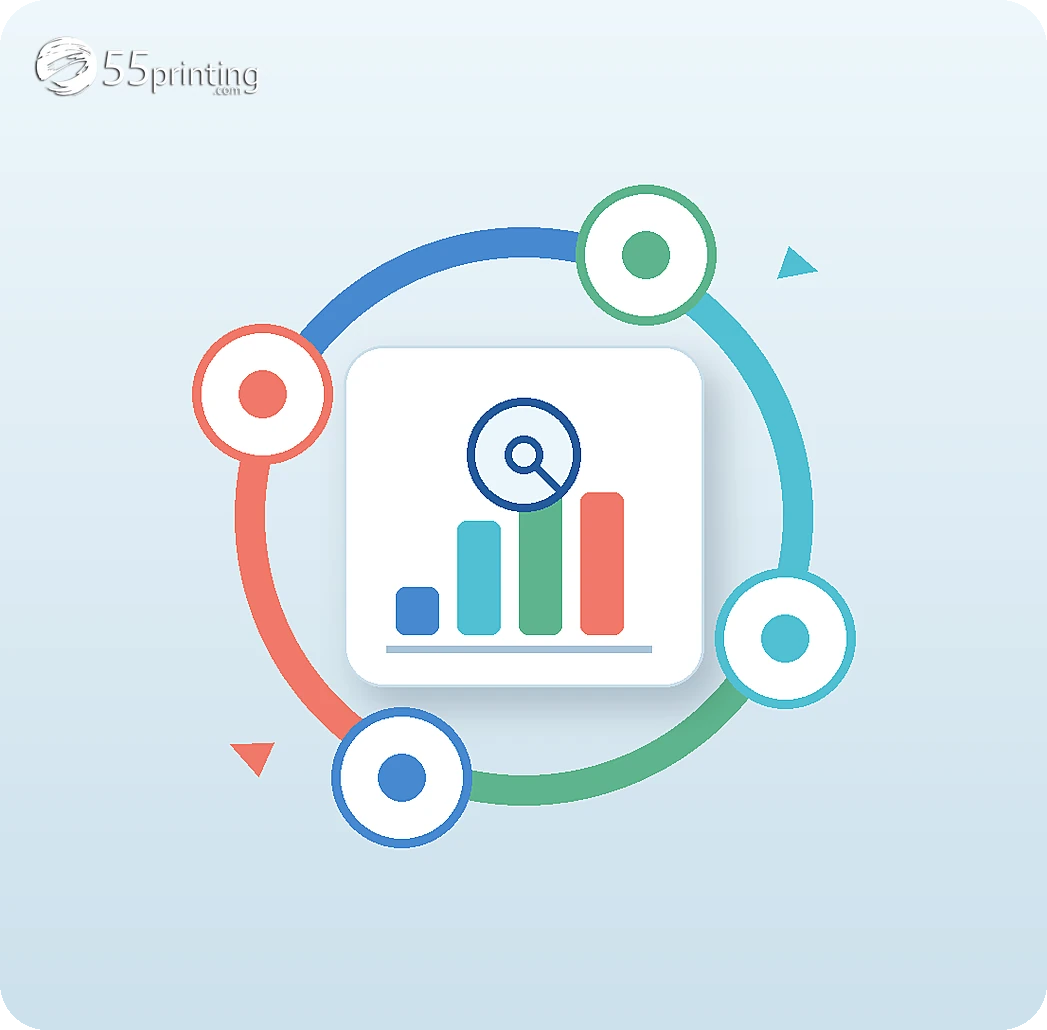
The data points toward a focused content and measurement program rather than a broad claim that every channel works equally. These are the recommendations that follow from the evidence:
- Write more answer-first guides. Start with the customer’s actual decision, such as file preparation, proof timing, product fit, or how a print order moves from upload to production.
- Make important facts easy to quote. Use direct opening answers, descriptive headings, honest limitations, and visible source context so both search systems and AI assistants can understand the page.
- Strengthen the link graph. A discovery article should lead to the relevant product, file-preparation help, and proof path. The customer should not have to hunt for the next action.
- Keep search and AI labels separate. Track ChatGPT and other AI hosts as their own family, while preserving the individual source when the evidence supports it.
- Ask registration questions without forcing them. The “How did you hear about us?” field is useful because it adds customer voice. Keep it optional and keep free-text short.
- Join data only in aggregate. When studying whether registrations later become orders, use privacy-safe cohorts and stable internal identifiers. Do not publish identities, order numbers, or individual journeys.
- Recheck the system as channels change. AI referral formats, browser privacy behavior, and campaign links evolve. A dated snapshot is evidence for a period, not a permanent market law.
The opportunity is not to chase a fashionable label. It is to keep making pages that answer real questions and to measure how people tell us they found them. Search engines, AI systems, and customer registration feedback all reward clarity in different ways.
Questions about search, AI, and registration referrals
What is an AI referral in print-shop analytics?
An AI referral is a visit whose available source context points to an AI assistant or AI service, such as ChatGPT or another named system. The signal may come from a referrer, UTM source, or landing context. It says how the visit was recognized, not that the assistant controlled the customer’s final decision.
Can a referral report prove that Google or ChatGPT caused an order?
No. A referral report can show that a visit arrived with source context associated with Google, ChatGPT, or another host. It cannot prove that the source caused the order, reveal every earlier touch, or describe the customer’s private reasoning. Use the report for directional learning and page improvement, not causal claims.
Why should search and AI referrals be separate?
They can expose different technical signals and represent different discovery experiences. Search may provide a recognizable search host, while an AI app may provide a UTM hint or no conventional referrer. Keeping them separate lets a business learn which pages are selected for search questions and which pages are recommended in conversational answers.
What is a customer registration referral?
It is the source a customer reports when creating an account, usually through a question such as “How did you hear about us?” The answer is valuable customer feedback, but it is self-reported. It should be stored separately from browser-observed attribution so the business can compare what the customer remembers with what the technical visit context shows.
Why can a registration answer disagree with the browser referrer?
People move between devices, apps, saved links, search results, and direct visits. Browsers can also limit referrer details, and an AI app may not send a normal web referrer. A customer may therefore choose Google while the browser is blank, or choose Other after an AI conversation. The disagreement is a measurement clue, not automatically an error.
Should a print shop require an account before checkout?
Not for attribution. Registration can help with order tracking, saved addresses, and account tools, but forcing it can add friction at the moment a customer is ready to buy. Keep guest ordering available when the commerce path supports it, and make registration useful enough that customers choose it for a clear benefit.
How can content help search engines and AI assistants?
Start with a direct answer to a real buyer question, then explain the decision with specific product context, honest limitations, and a clear next step. Use descriptive headings, accessible tables, clean internal links, and current facts. Do not write vague summaries for a platform label. Help the reader first, and make the answer easy to retrieve.
What should be measured after publishing a referral success story?
Review the page’s search impressions and clicks, AI visibility notes, referral sessions, registrations, and later conversion paths as separate measures. Recheck that internal links work and that the content answers the intended question. Compare declared registration sources with observed traffic only in aggregate, and refresh the interpretation when the evidence changes.
Use the 55printing preparation and proof resources to make the path from discovery to a confident print decision clearer.